October 30, 2025
Weather-Proofing Operation
When the forecast shows rain, snow, or freezing temperatures, most people stay inside. But as a white glove furniture delivery contractor, you’re loading up that truck regardless. Bad weather doesn’t stop deliveries—it just makes them harder. And in white glove service, “harder” can quickly turn into damaged furniture, angry customers, and insurance claims that eat your profits.
Here’s the truth: Weather separates professional carriers from amateurs. The amateur shows up late, tracks mud through the house, and leaves furniture damp. The professional? They deliver on time, keep everything pristine, and earn that tip—even in a blizzard.
1. Pre-Delivery Weather Planning
Check the forecast the night before. Not just for rain—check for freezing temps, wind speeds, and storm timing. A delivery scheduled for 2 PM might need to move to 10 AM if heavy snow starts at noon. Also, let your team know in advance of the situation.
Example: You’ve got three deliveries tomorrow and see freezing rain starting at 1 PM. Call those afternoon customers ahead: “Hi, this is [Name] from tomorrow’s delivery. I see freezing rain coming in the afternoon. Could we move your delivery to the morning for everyone’s safety?” Most customers appreciate the proactive communication. Those who can’t reschedule at least know you’re thinking ahead.
Pack your weather kit tonight, not tomorrow morning:
- Extra furniture blankets (double your normal amount)
- Waterproof furniture covers or thick plastic sheeting
- Extra floor protection (more than usual)
- Towels for wiping down wet surfaces
- Salt or sand for icy walkways
- Change of work clothes in waterproof bag
2. Customer Communication: Setting Expectations
Call before you leave the warehouse. “Good morning, this is [Name] with your delivery team. We’re loading your furniture now and will be there on schedule despite the weather. We have extra protective coverings due to the rain. Is your driveway accessible, or should we park on the street?”
This one call does three things:
- Shows professionalism
- Identifies access problems before you arrive
- Lets them prepare (clearing driveways, putting pets away, laying down their own towels)
Bad weather = longer delivery times. Tell customers upfront: “Due to the weather, our delivery may take an extra 15-20 minutes to ensure everything stays completely dry and protected.” They’d rather wait longer than see water spots on their new $3,000 sofa.
3. Vehicle and Loading Adjustments
Inspect your truck for leaks before loading. Run your hand along door seals. Check the roof. One tiny leak can destroy an entire bedroom set. If you find moisture in the truck bed from yesterday, dry it completely.
Load differently in bad weather:
- Keep furniture away from doors where rain might blow in
- Double-wrap anything going to the last delivery
- Put plastic between layers, not just on top
- Create a “staging area” near the truck door for wet equipment
Your truck becomes a moisture trap. Every time you open those doors, wet air rushes in. Between deliveries, crack the doors for 30 seconds to let moisture escape—but only if the rain has stopped.
4. The Approach: From Truck to a doorstep
Scout the path first—without the furniture. Walk from truck to door. Look for:
- Ice patches (even small ones)
- Puddles that will splash onto furniture legs
- Mud zones that’ll stick to your boots
- Overhead hazards (icicles, heavy snow on awnings)
Create a safe pathway:
- Throw down salt on icy spots
- Lay protective runners over mud
- Clear snow from the path—customer sees this as going above and beyond
- Wipe your feet at the truck AND at the door
The “wet weather handoff”: In rain or snow, one person stays in the truck keeping items dry while the other preps the path and door. Only move furniture when you have a clear, protected route.
5. Inside the Home: Protecting Their Space
Double your floor protection. What works on a sunny day fails in weather. Wet boots tear through thin runners. Snow melts and seeps through single layers. Use thick runners plus waterproof barriers underneath.
The entrance is your transition zone:
- Set up a “clean zone” just inside the door
- Have one person remove wet outer layers here
- Keep a dry pair of work shoes or a pair of shoe covers for inside-only use
- Never walk wet boots on unprotected floors—even for “just a second”
Watch for hidden moisture:
- Furniture blankets get damp from humidity alone
- Your clothes carry moisture that transfers to furniture
- Wet gloves leave marks on leather and wood
- Even your breath in cold weather creates condensation on glass and mirrors
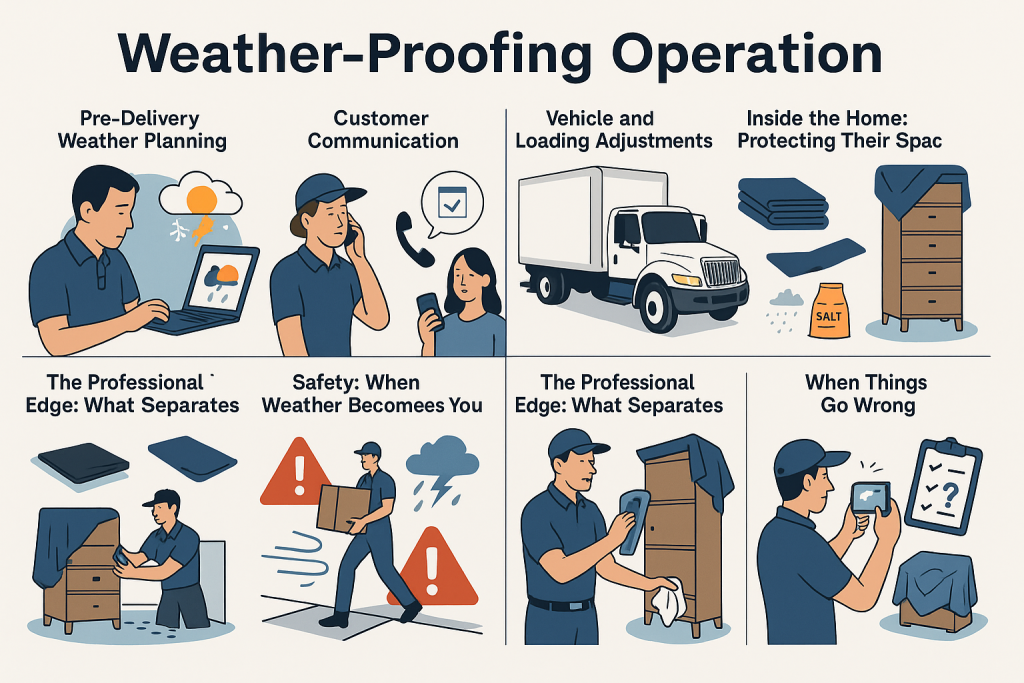
6. Safety: When Weather Becomes Dangerous
Your safety trumps delivery schedules. Period.
Ice is a business killer: One fall while carrying furniture can end your career. If you can’t maintain three points of contact due to ice, stop. Call the customer, explain the danger, reschedule. A professional knows when to say no.
Wind and furniture don’t mix: Winds over 30 mph turn dressers into sails. That mirror becomes a wing that can throw you off balance. In high winds:
- Get more help for large items
- Keep furniture low and horizontal
- Never fight the wind—wait for gusts to pass
Lightning = immediate stop: You’re carrying metal frames, standing in the open, often the tallest object around. First thunder means get in the truck and wait.
7. The Professional Edge: What Separates You
Bring customer conveniences:
- Offer to put down salt on their walkway after delivery
- Wipe down their storm door you touched with wet gloves
- Take your wet floor protection with you—don’t leave their entrance wet
- Mention your weather precautions—they’re paying for this level of care
The follow-up: Next day, text or call: “Just checking that everything stayed in perfect condition after yesterday’s delivery. The weather was challenging, but protecting your furniture is our priority.”
8. When Things Go Wrong
Furniture gets wet anyway?
- Stop immediately
- Document with photos
- Dry it thoroughly before proceeding
- Inform the customer and your 3PL partners right away—hiding it always backfires
Customer upset about weather delays? “I understand your frustration. This weather is affecting everyone today. We can rush and risk damage, or take the proper time to protect your investment. Which would you prefer?”
The Bottom Line
Bad weather deliveries are where reputations are built or destroyed. That customer watching you carefully protect their furniture in a downpour? They’re telling their friends. They’re writing that five-star review. They’re calling you for their next delivery.
Every extra minute spent protecting furniture in bad weather saves hours of claims processing. Every dollar spent on weather supplies saves hundreds in damages. Every careful step on ice protects your entire business future.
Remember: You’re not just delivering furniture in bad weather—you’re proving you’re a professional who delivers excellence regardless of conditions. That’s what white glove means. That’s what customers pay for. That’s what builds a business that lasts.
Weather doesn’t stop deliveries. It just shows who’s really a professional.
At White Glove Carrier Network (WGCN), we teach defensive driving not as an option, but as a foundation. Why? Because your truck isn’t just a vehicle—it’s your brand, your income, and your future.
Drive smart. Drive smooth. Drive safe.
Join WGCN today and build a business that lasts—one mile at a time.